.png)
Apoel 2 Zone Attacking Overloaded
ADDED TO FAVOURITES
Practice Breakdown:
Number of Players: 11 | Pitch size: 20x40
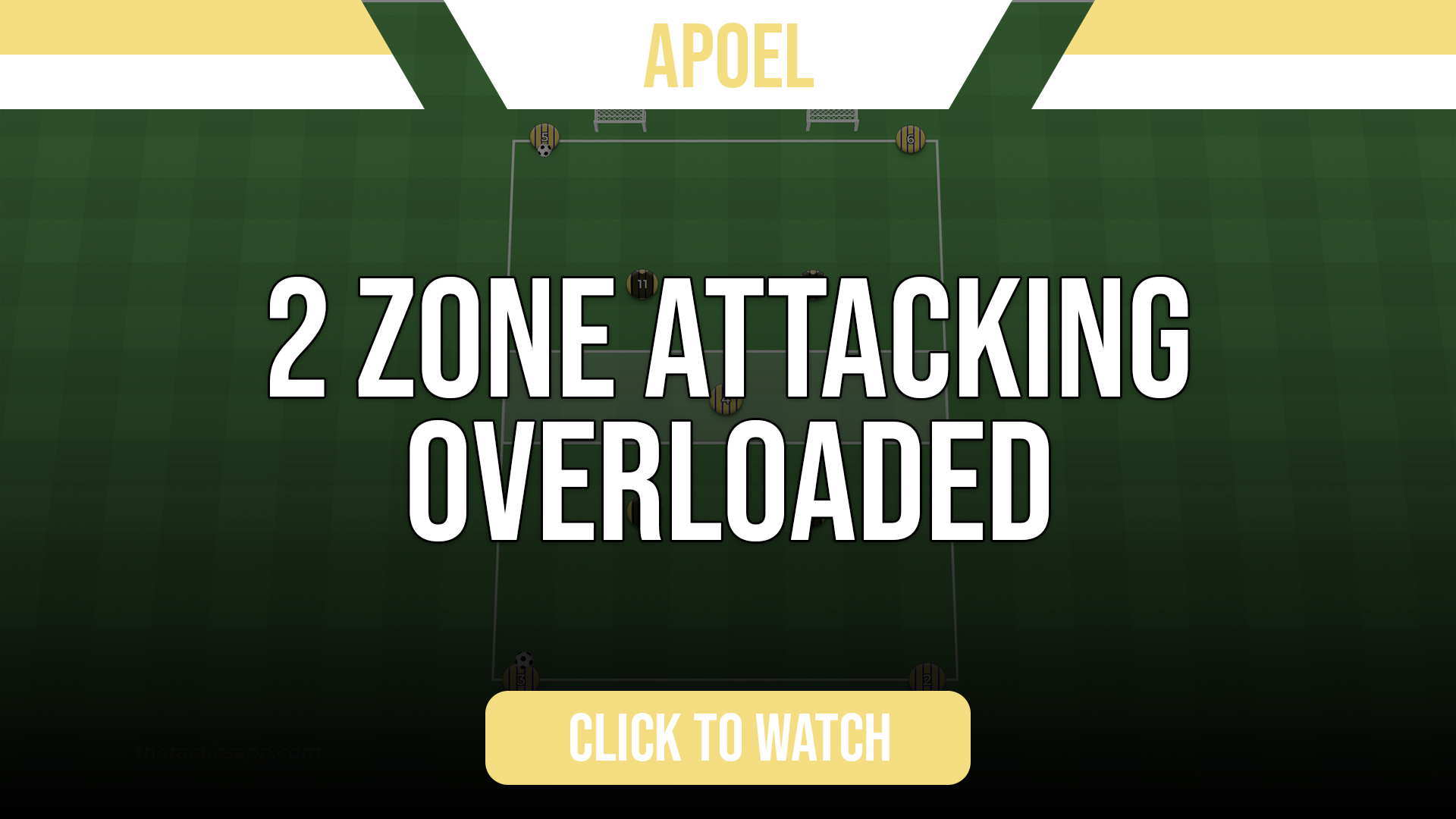
In this two-zone attacking overload practice, play begins with a 2v2 in the first zone, supported by a neutral player positioned in a central lane. The attacking pair must work the ball effectively to progress play forward and combine with the neutral player before entering the second zone. Once progression is achieved, the neutral player joins the attack to create a 3v2 situation, where the attackers attempt to score into two mini goals. After the phase is completed, the neutral player resets to the central lane and the practice restarts in the opposite direction with new attackers.
• Breaking Lines: Encourage attackers to recognise moments to play forward through the central lane with disguised, well-weighted passes.
• Support and Angles: Focus on off-ball movement to create clear passing lanes, depth and width during the build-up phase.
• Speed of Attack: Emphasise quick ball circulation and positive forward actions to exploit the overload before defenders can recover.
• Decision-Making in the Final Zone: Coach attackers to select the best finishing option quickly under pressure, using the overload effectively.
Limit Touches in the First Zone:
Restrict players in the build-up zone to two touches, increasing tempo, sharper movement and quicker recognition of progression moments.
Focus: Improves technical efficiency, scanning habits and speed of play under increased cognitive and physical pressure.
Add a Recovery Defender:
Allow an additional defender to recover into the second zone after progression, forcing attackers to execute faster and more decisively.
Focus: Develops realism, finishing quality under pressure and improved decision-making when overloads are reduced.
