.png)
Sao Paulo Finishing & Transitional 1v1
ADDED TO FAVOURITES
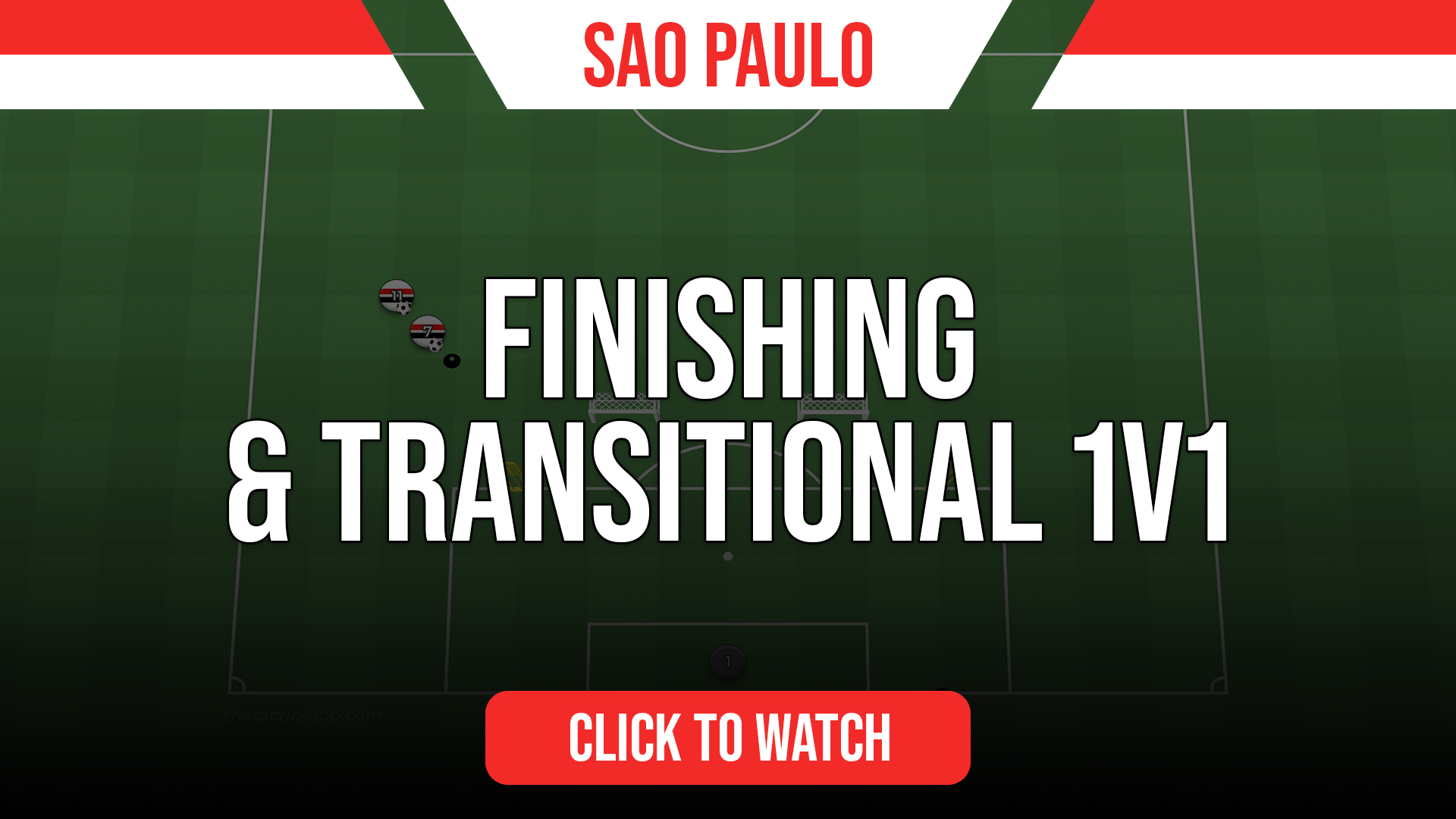
Practice Breakdown:
Number of Players: 5 | Pitch size: 40x30
This finishing and 1v1 practice is designed to develop composed finishing followed by immediate defensive transition. Two players start with a ball each—one positioned at the top of the penalty area and the other starting behind the goal.
The first attacker dribbles forward towards a mannequin, beats it with a positive move and finishes unopposed against the goalkeeper. As soon as the shot is taken, that same player must immediately transition into a defensive role.
At the same time, the second player dribbles from behind the goal, moving up and around a second mannequin before entering the pitch. Once they emerge, the practice becomes live in a 1v1 scenario, with the second attacker trying to beat the first player (now recovering as a defender) and score. The drill links technical finishing with recovery runs and realistic 1v1 defending.
• Positive Dribbling to Finish: Encourage the first attacker to drive at the mannequin with speed, intent and a decisive final action.
• Transition Reaction: Reinforce instant mindset change after shooting, reacting quickly and sprinting to recover into a strong defensive position.
• 1v1 Attacking Intent: Coach the second attacker to be aggressive, commit the defender and attack space with confidence.
• Defensive Body Shape: Emphasise delaying, staying balanced and showing the attacker away from central finishing zones.
Time Limit to Score in 1v1:
Give the second attacker 4–5 seconds to finish once they enter the pitch.
Focus: Increases tempo, attacking urgency and realism in transitional 1v1 situations, forcing quicker decisions under game-like pressure.
Add a Touch Limit for the Finisher:
Limit the first attacker to two touches before shooting in the unopposed phase.
Focus: Improves first-touch quality, finishing efficiency and faster defensive transitions under realistic physical and cognitive demands.
