.png)
Tokyo Build Up Possession
ADDED TO FAVOURITES
Practice Breakdown:
Number of Players: 10 | Pitch size: 20x20
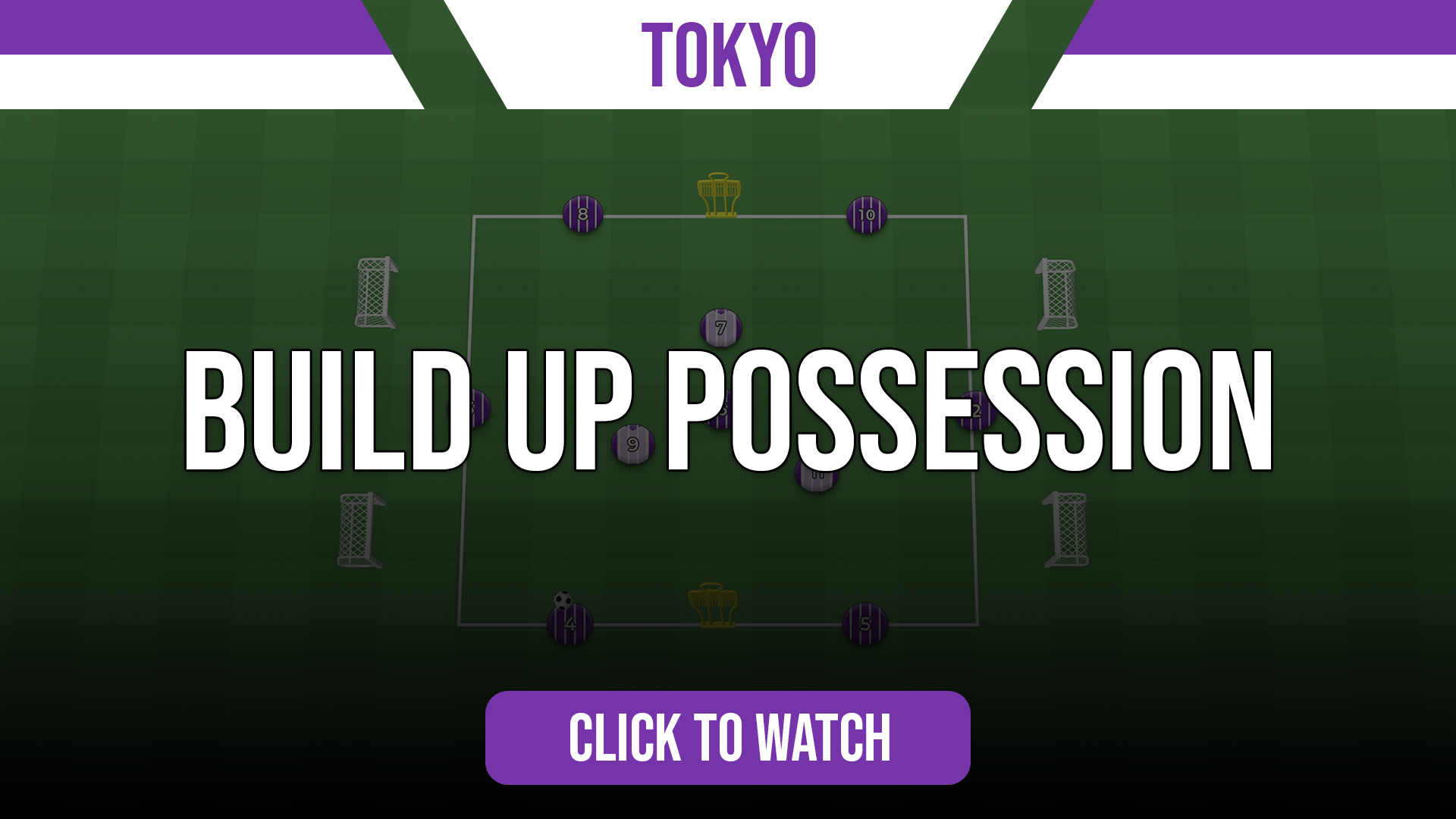
This possession practice is designed to develop structured build-up play under pressure. The setup includes two centre backs locked on the bottom line, two full backs locked on the touchlines, two attacking midfielders locked on the top line, and one floating midfielder who operates freely inside the grid. This creates a 7v3 scenario, with three defenders applying pressure and attempting to force turnovers.
The aim for the possession team is to retain the ball through patient circulation, intelligent movement and well-timed positional adjustments. The defending team can score into any of the four mini goals placed around the outside if they regain possession, encouraging realistic transition moments. Mannequins are positioned across the lines to prevent flat, horizontal “square passes” and to force players to drop off, open passing lanes and adopt better angles during build-up.
• Create Angles, Not Lines: Encourage players to avoid standing flat and instead move off mannequins to open diagonals and provide clearer passing options.
• Role Clarity in Possession: Reinforce centre backs building calmly, full backs offering width, attacking mids providing height, and the floating midfielder linking play.
• Receiving on the Half Turn: Coach players to position their body to play forward when possible, helping the team progress through the thirds.
• Defensive Pressure Awareness: Highlight the importance of scanning before receiving to avoid being pressed from blindside positions.
Two-Touch Minimum for Possession Team:
All possession players must take at least two touches—one to control, one to play. This increases the emphasis on the quality and direction of the first touch and encourages better preparation for the next action.
Focus: Enhances first-touch control, passing accuracy and composure in build-up.
